
Types of Content in the Digital Signage Industry: Video, Static Images and Text. What Should We Know?
In today's dynamic world, many companies strive for multichannel communication with their audience. Channels such as Digital Out-of-Home (DOOH), web, social media and TV form a mix of numerous touchpoints with brands' target audiences.
Good and, above all, up-to-date content (!) is a key success factor for every digital signage project.
From our experience managing digital signage projects in Bulgaria for over 100 brands, we can safely say that video content dominates. And this is no coincidence.
What Does Science Say?
Cognitive psychology studies how different types of stimuli are perceived by the human brain and how this affects attention, emotions, motivation and decision making.
Cognitive Perception and Processing of Different Types of Content
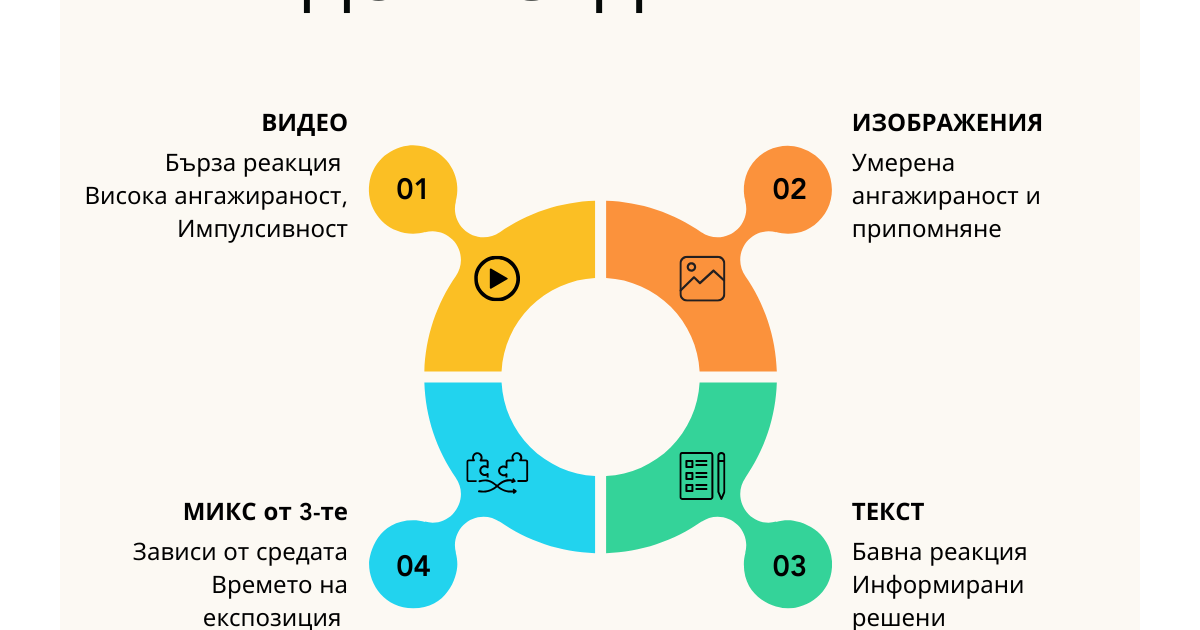
Video (dynamic content): Combines movement, sound and visual changes over time, which activates multiple brain areas. Video attracts attention more effectively than static images or text. The dynamic nature of video makes stimuli more pronounced and has a greater emotional impact, which can strongly influence impulsive purchasing behaviour.
For the digital signage industry, video is the best format, leading to higher viewer engagement and a stronger influence on consumer behaviour.
Static images: Static images are another popular format used in digital advertising. They have a weaker impact than video, but a better one than text. Their impact depends largely on visual characteristics such as colour, size and composition, which influence attention and emotional resonance. Images support faster recognition, but usually lead to less complex narrative processing compared with video, moderately influencing consumer emotions and brand recall.
Text: Text requires analytical processing, which is cognitively more demanding and slower than visual stimuli. For this reason it has a weaker impact than video and static images. Text stimulates analytical processing, engaging memory and comprehension, which is important when making complex decisions.
Effects on Consumer Behaviour
Videos and images trigger faster reactions because of their direct effect on the sensory and emotional areas of the brain, facilitating impulse purchases and brand attachment.
Text stimulates in-depth cognitive processing, supporting an informed and rational consumer choice, but usually leads to slower decision-making.
Combining different types of stimuli (e.g. video with text) can optimise user engagement by appealing to both the emotional and analytical aspects of decision making.
Stimulus type |
Cognitive processing |
Effect on the consumer |
Reaction time |
Emotional impact |
|---|---|---|---|---|
Video |
Multisensory, dynamic, high noticeability |
High engagement, impulsiveness |
Fast to moderate |
Strong emotional arousal and memory |
Static images |
Visual encoding, less complex |
Moderate engagement and recall |
Moderate |
Moderate, depends on visual characteristics |
Text |
Linguistic, semantic, analytical |
Informed decisions, slower reaction |
Slow |
Lower, unless emotionally framed |
Our behaviour as consumers is directly influenced by how our brain perceives stimuli. The dynamic, high-impact nature of video triggers strong emotional and motivational responses, which makes it the preferred format in digital signage campaigns. Text, on the other hand, supports more complex and analytical decisions.
What Should Digital Marketing Choose?
Marketing specialists use a mix of video, static images and text depending on the campaign goals, exposure time and placement environment.
The video format is best for engagement and storytelling, static images for quick and clear visual messages, and text should be used to educate the audience and for complex, informed choices.
In my view, the main takeaway for the digital signage industry is that combining video and static images with short, clear and well-structured text can optimise the impact on visual memory and increase the effectiveness of advertising campaigns.
Sources:
A neurophysiological behavioural perspective on the significance of stimuli in consumer behaviour
Picture superiority effect and visual attention
A cognitive approach to consumer decision making and "Stimulus-Organism-Response" models