Digital Signage in Hotels: A Solution for Higher Revenue and Better Service
In 4- and 5-star hotels, the guest experience must be flawless. Yet many hotel complexes still rely on brochures, printed signs, and verbal explanations from staff.
This leads to several key problems:
Repetitive questions at the front desk
Guests constantly ask about restaurant hours, spa schedules, pool access, or transportation. In large hotels, this creates significant pressure on the reception team.
Low visibility of additional services
Spa treatments, special menus, cocktail evenings, or excursions often go unnoticed. The reason is simple—guests either do not see the brochure or are unaware the service exists.
High costs for printed materials
Menus, signs, and announcements must be reprinted frequently. This results in extra costs, wasted time, and an inconsistent visual environment in common areas.
Outdated hotel image
Premium guests expect a modern, digital environment. Static signage creates the impression of outdated infrastructure and lack of innovation.
The Solution: Digital Signage for Hotel Communication
Digital signage systems are networks of advertising and information screens managed centrally through software.
They allow hotels to:
-
update information instantly
-
promote services and offers
-
guide guests through the property
-
create a modern, premium atmosphere
Instead of static signs, the hotel gains a dynamic communication system that works 24/7.
Where Digital Signage Creates the Most Value
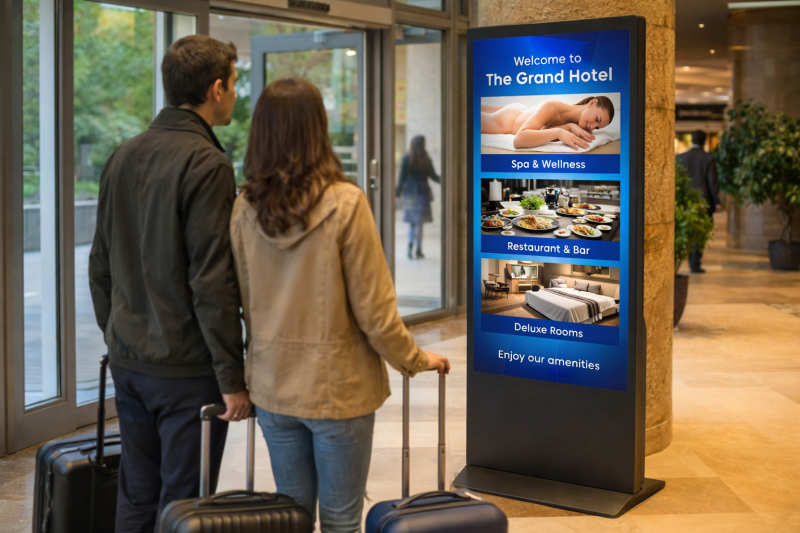
Lobby and reception screens
These displays inform guests about:
-
restaurant and spa opening hours
-
hotel events
-
promotions and packages
This reduces questions at the front desk and improves service efficiency.
Elevator screens
Elevators are high-attention areas. Screens there can display:
-
spa offers
-
evening events
-
special menus
This makes them a powerful channel for impulse purchases.
Digital signs outside conference rooms
These screens show:
-
event schedules
-
company logos
-
directions
This improves organization and strengthens the hotel’s image among corporate clients.
Screens in restaurants and bars
Digital menus can change automatically depending on the time of day:
-
breakfast
-
lunch
-
dinner
-
happy hour offers
Screens in spa and fitness areas
They promote:
-
treatments
-
packages
-
available booking slots
This increases on-site reservations.
Key Business Benefits of Digital Signage in Hotels
1. Reduced staff workload
Guests receive information independently without waiting at the reception desk.
2. Increased revenue from additional services
Screens act as a constant sales channel for:
-
massages
-
room service
-
restaurant offers
-
transfers
-
excursions
This increases the average revenue per guest.
3. Modern, premium image
Digital signage creates a contemporary, high-tech atmosphere that meets the expectations of guests in 4- and 5-star hotels.
4. Lower operational costs
No need for constant printing of brochures and signs. Everything is managed from a central software system.
What Content Works Best on Hotel Screens
For maximum impact, content should be:
-
visual – photos and short videos
-
concise – easy to read in seconds
-
dynamic – adapted to the time of day and guest profile
For example:
-
morning – breakfast and spa offers
-
afternoon – activities and excursions
-
evening – restaurant and bar promotions
Conclusion: An Investment in Experience and Revenue
Digital signage in hotels is not just a technological upgrade. It is a tool for:
-
better guest service
-
higher revenue
-
a more modern brand image
-
lower operational costs
For 4- and 5-star hotels, this means a better guest experience and higher profitability per stay.