Digital Advertising in Pharmacies and Drugstores: Up-to-Date Content at Every Location
Pharmacy and drugstore chains communicate with their customers mainly in person: in the shop window, on the shelf and at the counter. With every new location, it becomes harder to keep the information there current everywhere at the same time. This article looks at three specific problems with printed materials and how digital screens with central management solve them.
Why paper promotions fall behind
Promotions in pharmacy chains change often, in many cases every month. Each change of printed materials goes through several stages: design and approval, printing, distribution to the locations, and placement by the staff. The last stage depends on the people in the pharmacy, who are serving customers at the same time, so the process is usually slow.
The result is inconsistency between locations. In one pharmacy the new promotion is in the window on day one, in another it appears a few days later, and in a third last month’s poster is still up. The customer sees a price or offer that is no longer valid. This takes up the pharmacist’s time and undermines trust in the information in the store.
On top of this come printing and transport costs, which recur with every campaign. There is also the material that ends up in the bin when an offer changes at the last minute or a printing error is discovered.
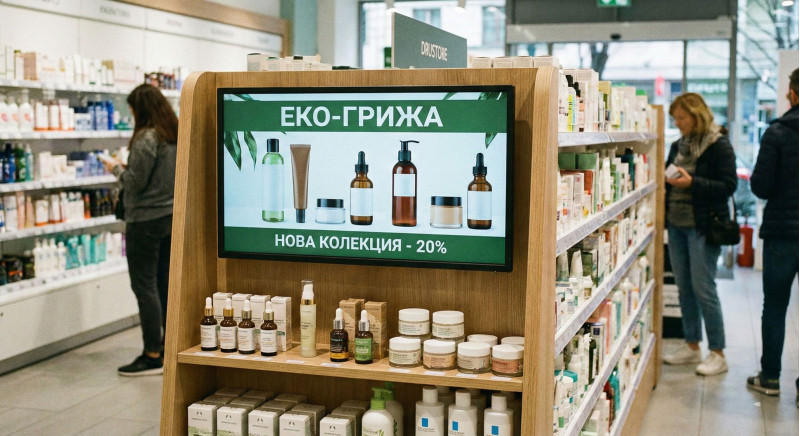
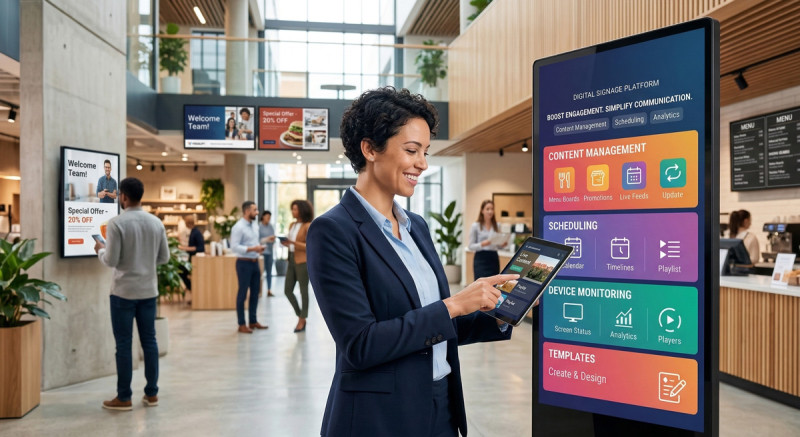
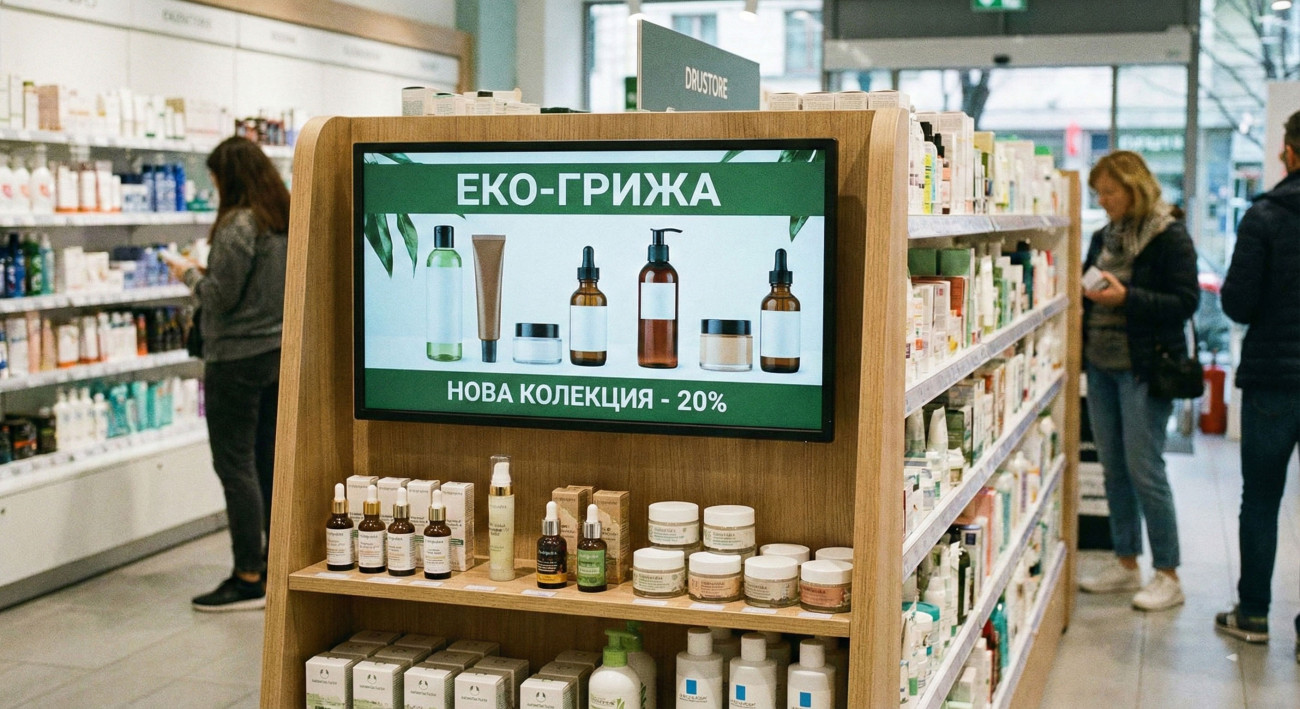
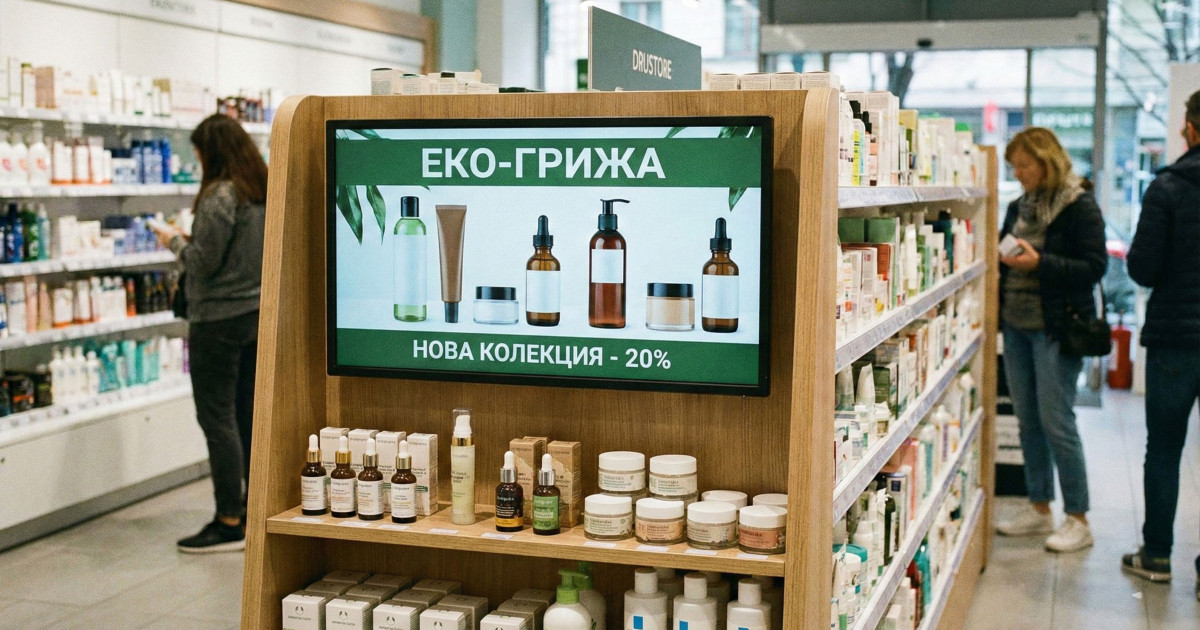
With digital screens, the printing and distribution stages disappear. The marketing team uploads the new content to a cloud platform and sets the date from which it starts playing. The change reaches all locations at once, regardless of how busy a particular pharmacy is.
Different locations, different customers
A chain rarely serves the same clientele at all of its locations. A pharmacy in a resort complex sells sun protection and insect bite products in summer. A neighborhood pharmacy in a large city has different priorities in the same month. In winter, demand at both locations shifts toward cold and flu remedies. A drugstore in a shopping mall and a drugstore in a residential area also attract different shoppers.
Centrally printed materials are, as a rule, identical for all locations. A separate print run for each group of locations makes design and printing more expensive and complicates distribution. As a result, the same poster has to work in places with completely different demand.
Central screen management allows a different approach. The chain divides its locations into groups by geography, type or seasonality, and each group gets its own program. Resort pharmacies show seasonal products only during the season, while city pharmacies focus on prevention in the autumn. The chain’s general campaigns run everywhere. The decision stays with the central marketing team, while the content fits the place where it is shown.
Time at the counter
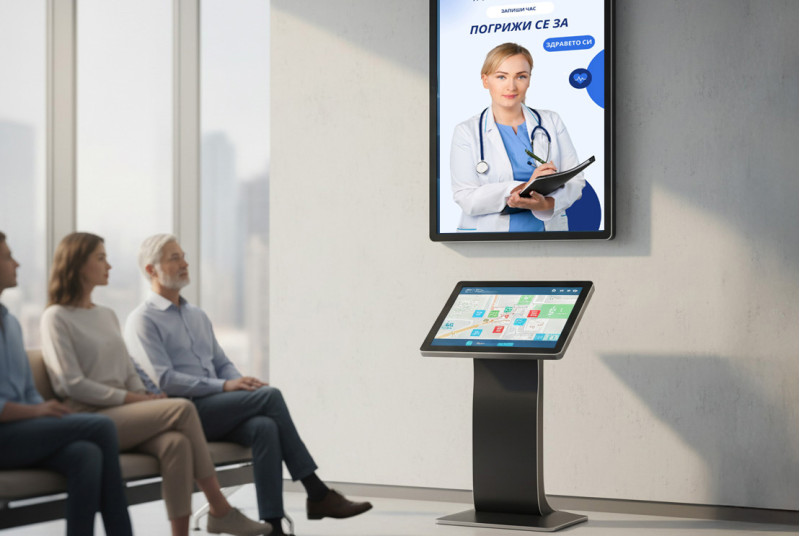
In a pharmacy, customers often have to wait. The pharmacist is serving the person ahead of them, looking for a medicine or explaining how to take it. Meanwhile the customer’s gaze is directed at the checkout area or the shelves behind the counter.
These few minutes of attention are ideal for impulse purchases.
A static paper poster usually stops being noticed after the first glance.
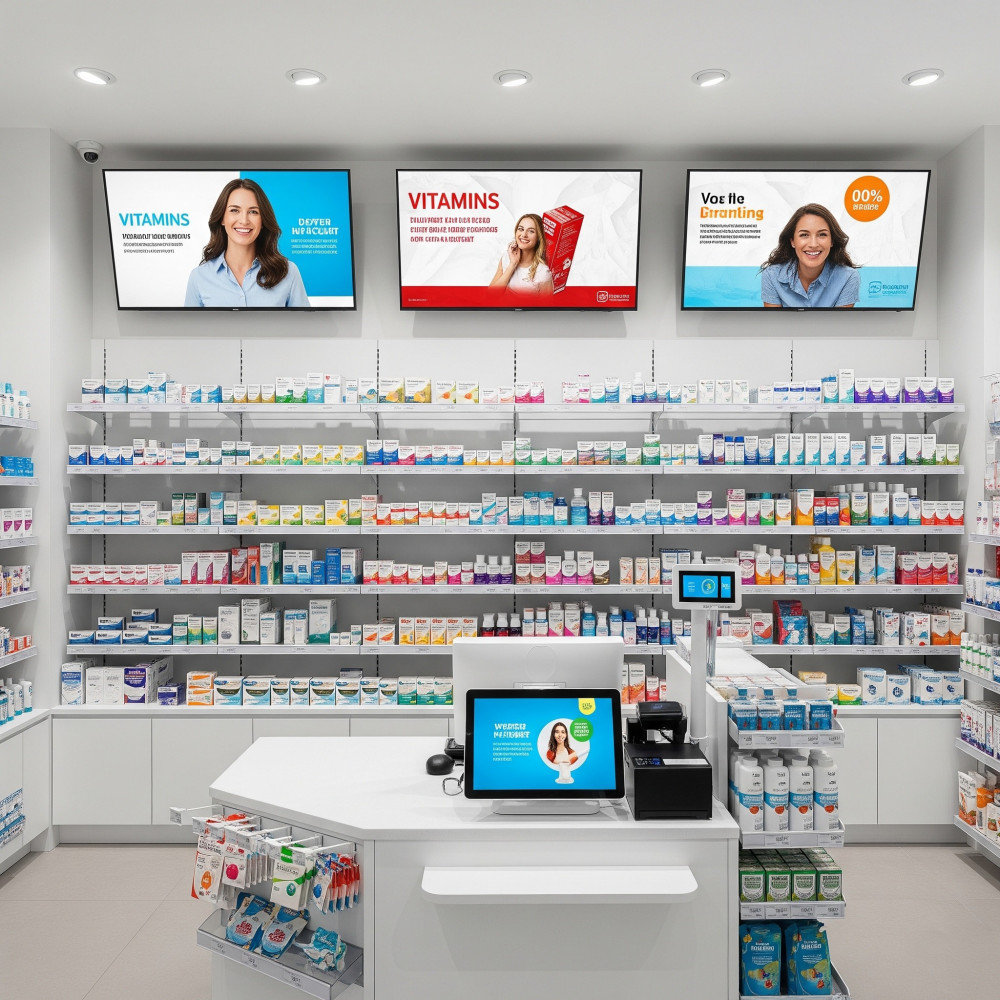
By contrast, dynamic video content on a screen attracts and holds attention up to 400% more. A screen by the counter can show several clips and promotions at once, which is impossible to do on paper.
The right content for this zone is short and useful: seasonal prevention tips, and introductions to dermocosmetics and supplements that are hard to sell without a consultation. It also includes reminders about the pharmacy’s services, if it offers any.
The goal is not an aggressive sale. The goal is for the customer to learn about a product they would otherwise ask about only if the pharmacist had a free minute.
What the transition to digital screens looks like
The transition does not require all locations to be converted at once. A practical sequence of steps:
- Choose a pilot group of a few locations with different profiles, for example a resort one and a city one.
- Define the zones: the window, the area by the counter, or both.
- Divide the locations into groups by geography and type from the start, when configuring the platform.
- Prepare content for the first campaigns and a schedule for changing it.
- After the pilot period, compare the sales of the advertised products at locations with and without screens, and decide whether to expand the network.
IDS Global supplies the hardware, the cloud content management platform and the installation. This way, the chain works with a single supplier for the entire process.
Conclusion
Printed materials in a pharmacy or drugstore chain fall behind because they depend on many stages and many people. Identical posters do not reflect the differences between locations, and the time at the counter goes unused. Digital screens with central management solve all three problems with one tool. The content is current everywhere, fits the specific location and reaches the customer exactly when they are waiting.
If you would like to see how such a system would look in your chain, request a demonstration at idsglobal.eu. We will run it on a real scenario with your locations and campaigns.