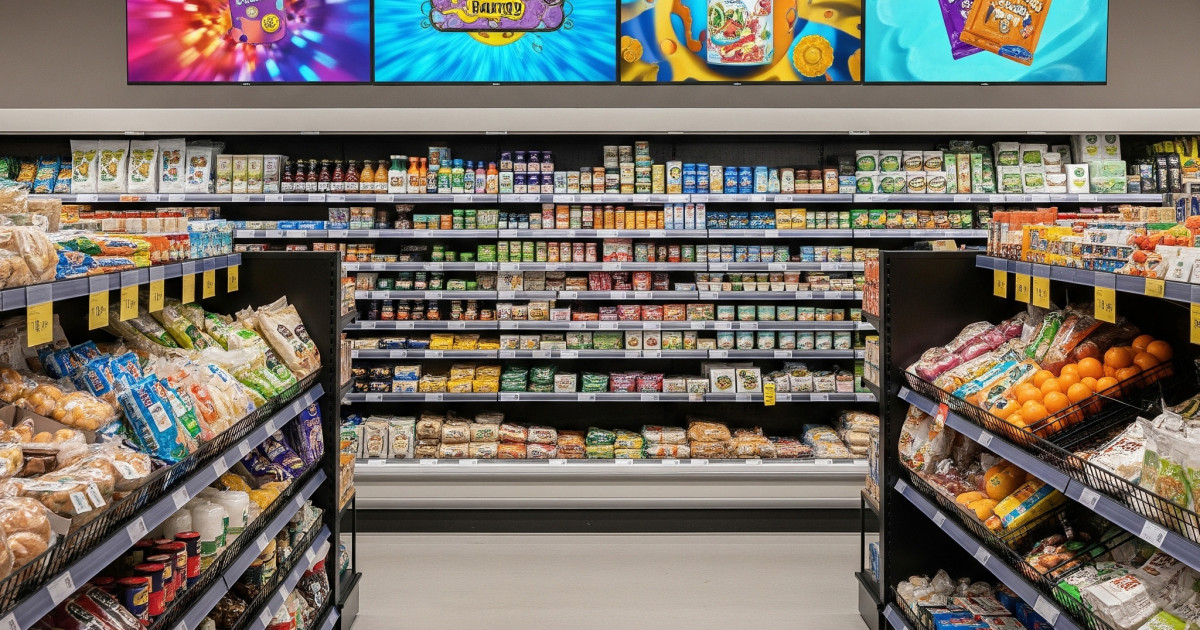
Digital Signage in 2026: Trends that will dominate digital out-of-home advertising
In 2025, we will see advertising screens everywhere - in retail outlets, restaurants, hotels, gyms, and other places. They are becoming a mass means of communication for brands with their customers outside the home. Centralized CMS content management allows for rapid updating from a distance.
In 2026, the penetration of Digital Signage screens will continue, as they will become more intelligent, interactive, and fully integrated communication platforms that change the way businesses communicate with their customers outside the home.
The future of visual communication is dynamic, personalized, and highly engaging.
In the coming year, we will witness an accelerated evolution driven by artificial intelligence, advanced sensor technologies, and the merging of the physical and digital worlds.
Here are the key trends that will dominate the world of digital signage in 2026.
1. Hyper-personalization through artificial intelligence (AI)
If personalization was previously limited to displaying different messages in the morning and afternoon, in 2026 artificial intelligence will take it to a whole new level. According to Gartner forecasts, by 2026, over 80% of companies will have implemented generative artificial intelligence in their processes. For digital signage, this means the end of universal content.
How will this work? Cameras and sensors built into the displays will analyze anonymous demographic data of the passing audience – such as approximate age, gender and even mood. Based on this information, AI algorithms will generate and display content in real time that is as relevant as possible to the specific person.
Imagine a storefront that displays a sports advertisement when it detects a group of young people, and switches to a family vacation when a family with children passes in front of it.
2. Next-generation interactivity
Standard touchscreens are no longer enough. In 2026, interactivity will become more intuitive and multi-layered. Displays that respond to gestures, voice commands, and even the proximity of mobile devices are expected to enter the market.
Application examples:
Retail: A customer can interact with a product on the shelf, and a digital sign next to it will immediately display additional information, reviews from other users, and possible combinations.
Museums and galleries: Visitors will be able to receive detailed information about an exhibit with just a hand gesture, without having to touch the screen.
Corporate environment: In office buildings, digital signs will serve as interactive navigation, showing a personalized route to the desired room.
Mobile integration will also deepen, allowing users to “cast” content from their phone screen to theirs and back again, creating a seamless user experience.
3. “Phygital”: Merging the Physical and the Digital
The term “Phygital” (from physical and digital) describes experiences that blur the line between the real and virtual worlds. Digital signage will be a key element in this trend, most notably through technologies such as augmented reality (AR) and advanced QR codes.
What will this look like in practice? Imagine an advertisement for a new car on a digital screen. By scanning a QR code or simply pointing a smartphone camera, a user will be able to “place” a life-size 3D model of the car in front of them, view its interior, and even change its color – all through their phone screen while standing on the street. These types of experiences don’t just inform, they create an emotional connection and leave a lasting memory with the user.
4. Data Analytics to Measure Performance
Businesses will increasingly demand clear data on the return on their digital signage investments. In 2026, content management systems (CMS) will offer increasingly sophisticated analytics tools.
Using sensors and computer vision software, platforms will collect anonymous data on:
Impression Count: How many people actually looked at the screen.
Dwell Time: How long they viewed a particular piece of content.
Engagement Level: What interactions they had (if any).
Audience Demographics.
This data will allow marketers to optimize their campaigns on the fly, test different visual messages, and prove the real-world effectiveness of their digital signage.
5. Sustainability and Environmental Responsibility
The growing public and corporate focus on sustainability will also have an impact on the digital signage industry. In 2026, there will be increased demand for energy-efficient displays, such as those with lower power consumption or screens with "e-paper" technology, which consume energy only when changing the image.
Companies will look for solutions that not only reduce their carbon footprint, but also communicate their